Don’t plan to the last dollar.
Your project budget and your spending limit should not be the same number.
Here is one of the most common things I’ve seen in 25 years of kitchen design-build: a homeowner sets a budget, and then plans the project right up to the edge of it. Every dollar is assigned before demolition day. And then the walls open.
A realistic budget leaves room for the project you can’t see yet. That begins with understanding that your investment has three parts.
01. The plan
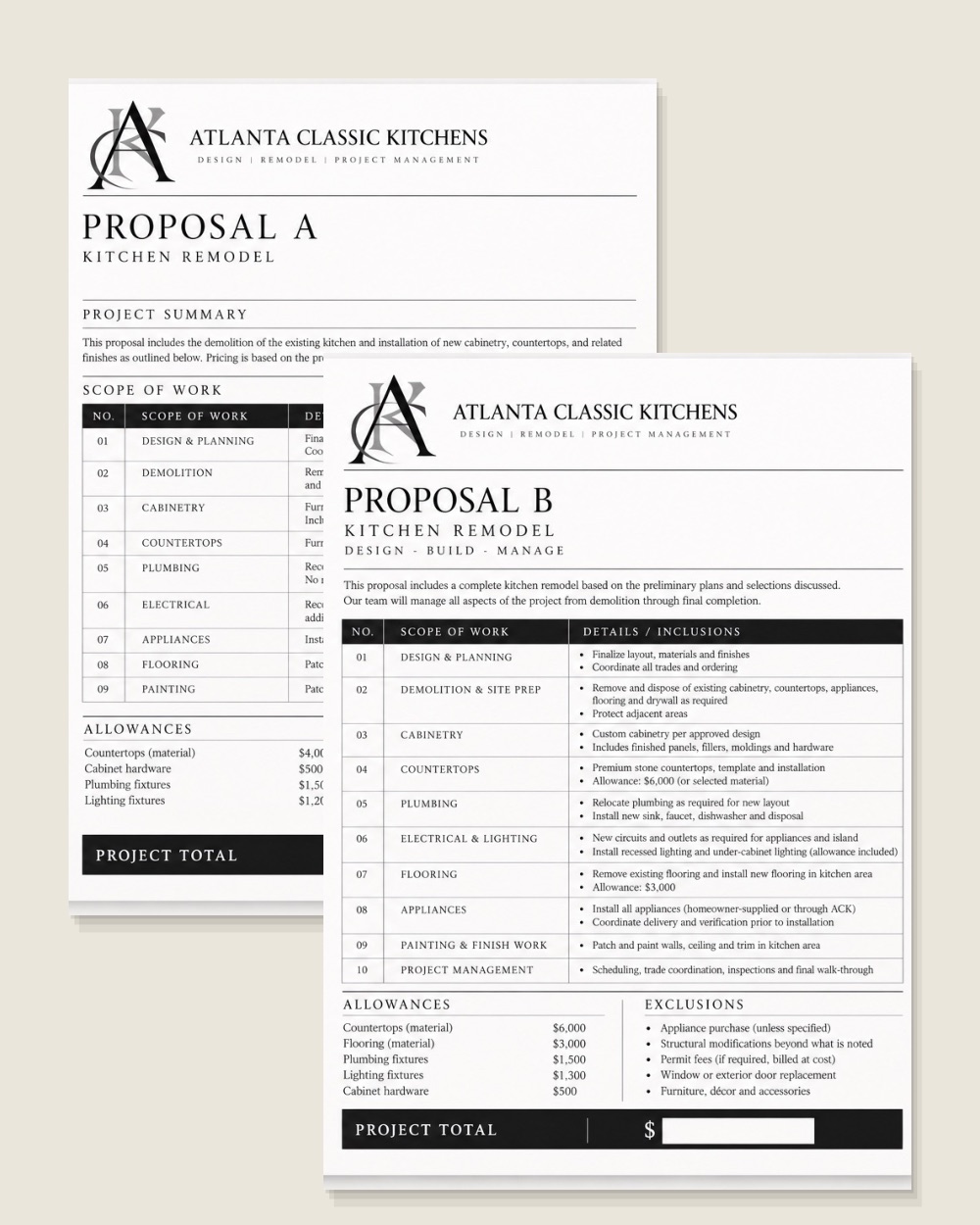
This is what you can identify and price before the project begins: cabinetry, appliances, construction scope, finishes and installation. It’s the part most people think of as “the budget,” and it’s the part you see in a proposal.
02. The unknowns
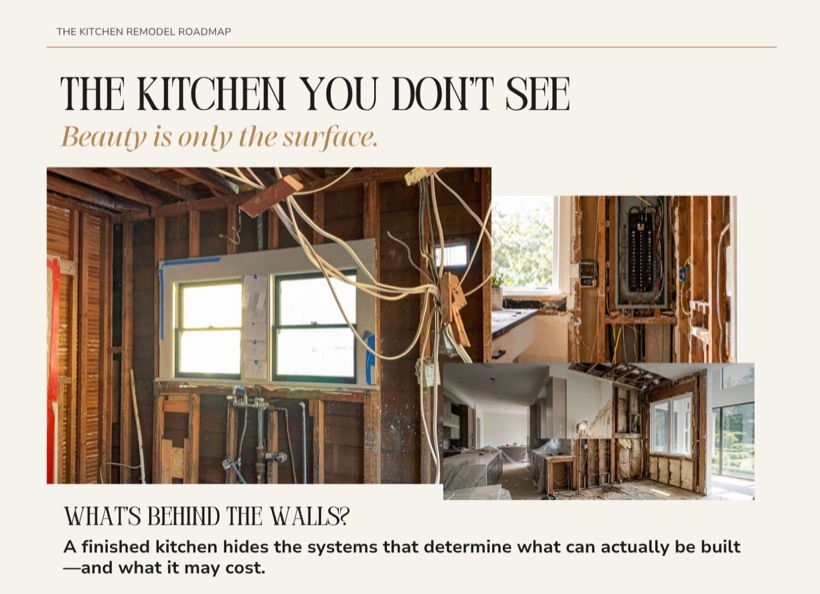
What may only reveal itself once work begins. Existing conditions. Concealed damage. Required repairs. Field conditions that no one could have confirmed until the cabinets came off the wall.
A finished kitchen hides the systems that determine what can actually be built — and what it may cost. Electrical capacity, plumbing locations, venting paths, load-bearing walls, ductwork, joists, and the subfloor beneath the finished floor.
03. The reserve
What keeps an unexpected condition from becoming a crisis. Leave part of your available funds outside the planned project cost. If you never need it, wonderful. If you do, you’ll be grateful it was there.
Plan for what you know. Leave room for what you don’t.— Shelley
The beautiful part is only part of the investment
The finished kitchen is what you see. The investment includes everything it takes to get there: demolition, construction, electrical, plumbing, installation, flooring and professional coordination. Costs vary depending on who manages and coordinates your project — so ask.
Before your first budget conversation
You don’t need an exact number yet. You need an honest starting point. Answer these four questions and bring them with you:
- Your comfortable range. What investment range are you prepared to discuss?
- Your priorities. If the budget requires choices, what are you least willing to compromise?
- Your flexibility. Where are you willing to adjust — scope, finishes, appliances, timing?
- Your reserve. Have you left funds outside the planned budget for unforeseen conditions?
A realistic budget isn’t about choosing the lowest number. It’s about understanding what your project requires and deciding what you’re comfortable investing before the design starts driving the decisions.
— Shelley
Shelley GilesOwner, Atlanta Classic Kitchens · 25+ years in kitchen design-build